
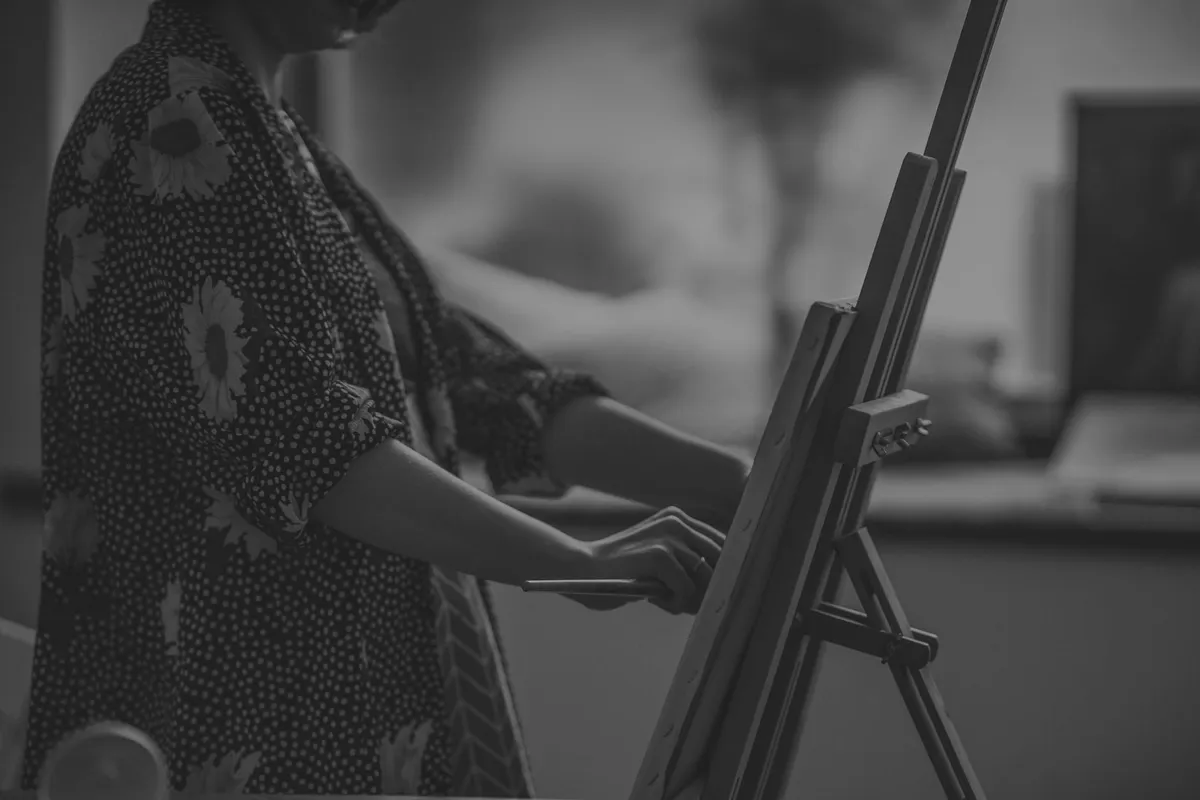
The artists I know who have sustained practice across decades almost universally share one structural feature: protected daily studio hours. The specific hours vary across artists — some work mornings, some afternoons, some late nights. The duration varies — some maintain three or four hours daily, some maintain two. What does not vary is the protection of the hours and the dailiness of the practice.
This essay is about those hours — what they actually look like, what they require to defend, and why they remain the structural foundation of any creative life that produces a body of work.
What the hours look like
The romantic image of the artist's studio day — long stretches of inspired work, the brush moving freely, the day organized around the work — corresponds to almost no working artist's actual experience. The real studio day, for most artists who sustain practice, is more modest. Two or three hours of focused work. Often less than the artist would prefer. Almost never as much as the romantic image suggests.
What matters is not the quantity of the hours but the quality of the engagement during them. A focused two hours produces more than a distracted six. The artists who sustain practice have learned to be present during the hours they have, rather than wishing for hours they don't.
The dailiness matters more than the duration. Two hours daily across a year produces more than ten hours weekly given in unpredictable bursts. The brain, the eye, the hand all benefit from continuity. Skills that develop through daily practice atrophy through inconsistent practice.
What the hours require to defend
The defense of studio hours is mostly defense against small intrusions. Not the dramatic crises that occasionally derail any practice, but the constant ambient pull of competing demands. The text message that could be answered. The errand that could be completed in the same time. The administrative task that's technically due. The phone call that could be made.
Each individually is small. The cumulative effect of permitting them is the dissolution of the studio time. Artists who sustain practice almost universally describe a posture toward their working hours that strikes other people as excessive — phones in another room, doors closed, the willingness to disappoint others who want their attention during the protected time.
This posture is hard to maintain because it is socially costly. Other people experience your unavailability as rudeness. Your family may experience it as selfishness. Your professional relationships may experience it as flakiness. The artists who continue accept this cost. The artists who quit usually quit because they were unwilling to accept it indefinitely.
The morning case
Many artists who sustain practice do their work early in the day. The morning hours are easier to defend because nothing else has yet been able to claim them. The mind is closer to the dream-state and often produces work the waking state would not. The interruption rate is lowest before others are awake.
This is not a moral preference for morning hours; it is a practical observation about which hours are most defensible. Artists who do their best work in the evening or at night manage similarly when their lives permit it.
What the early-morning practice does demonstrate, however, is the cost of the discipline. Artists who work in the morning typically also go to bed early. They miss the late evenings that other people consider central to social life. The practice is built at the expense of other things; this is not incidental but constitutive.
The years when nothing seems to be happening
The hardest test of the discipline is not the years when work goes well but the years when it doesn't. There are years in any serious practice when the studio hours produce work that isn't good. Drafts that go nowhere. Projects that don't come together. The sense that all the time being given to the work is being wasted.
The artists who continue across these years almost universally describe the discipline of giving the hours to the work even when the work isn't coming. The hours aren't about production; they are about presence. Showing up daily, regardless of whether today's session produces anything publishable, is what maintains the practice across years when productive returns are absent.
This is the deepest test of the discipline. Most artists can show up when work is going well. Few can show up reliably when it isn't. The discipline is most needed, and most often abandoned, in the years that matter most for sustaining the long arc of a creative life.
Why the dailiness matters
The dailiness produces effects that aren't available through other patterns. The work-in-progress is held in continuous attention rather than being picked up and dropped. Connections develop between sessions that batch sessions cannot replicate. Problems work themselves out subconsciously between sessions in ways that depend on the regular return.
The cumulative effect across years is substantial. Artists who maintain daily practice across decades produce bodies of work that artists with inconsistent practice cannot match, even when the inconsistent artists work more total hours when they work.
The dailiness, in other words, is more efficient than its reputation suggests. The discipline isn't about virtuous suffering; it's about producing the best work the artist is capable of producing across the available time.
The minimum that works
For artists with significant constraints (day jobs, caregiving responsibilities, other commitments), what's the minimum that produces meaningful work?
From observation: roughly 90 minutes most days, sustained across years. Less than that produces incremental progress that can be lost between sessions. More than that is excellent if available. The 90-minute floor is what most working artists with substantial constraints have settled into across years.
The 90 minutes need to be focused. Not 90 minutes during which other things are also happening; 90 minutes given to the work alone. This requires either the morning before others are awake, late nights after they're asleep, or arranged blocks of time during the day that someone else is making possible.
The case against the optimization frame
Contemporary creative-life advice is full of optimization — productivity systems, timer techniques, software that tracks creative work, methods that promise to make the practice more efficient. Most of these are distractions from the simpler truth.
The simple truth is that sustained creative work requires sustained showing up, in protected hours, across years. The hours don't need to be optimized. They need to be defended. The work during the hours doesn't need to be efficient. It needs to be honest. Artists who get bogged down in optimization are usually artists who haven't yet committed to the discipline; the optimization is a way of avoiding the harder commitment.
The harder commitment is unglamorous. It is also, for the artists who make it, the structural foundation that everything else rests on. The body of work, the development of practice, the eventual recognition: all of it sits on the discipline of the daily hours.
The artists who built lives this way
The artists who built bodies of work across decades speak about their practice with a strange combination of acknowledgment and reluctance. They acknowledge what it cost them. They are reluctant to recommend it because they know what they are recommending. The work is sometimes worth the cost. Whether it is, for any given person, is a question only that person can answer.
But the structural truth — that sustained creative work requires sustained protected hours — is not really up for debate. The artists who built bodies of work all built them this way. The exceptions are exceptional enough to be unreliable as models. The pattern is the pattern.
For artists at the start of their working lives, this can feel discouraging. The discipline is real; the cost is real; the alternative (no body of work across decades) is also real. The choice is yours; the constraints are not negotiable.
The closing observation
The daily studio hours are the foundation of any sustained creative practice. They are unglamorous, hard to defend, costly to maintain. They are also what produces work that lasts.
For artists serious about producing a body of work, the structural decision about studio hours is the most-important career decision available. Get this right and the rest follows. Get this wrong and no other decisions can compensate.
Worth taking seriously. Worth structuring life around. Worth the cost.