
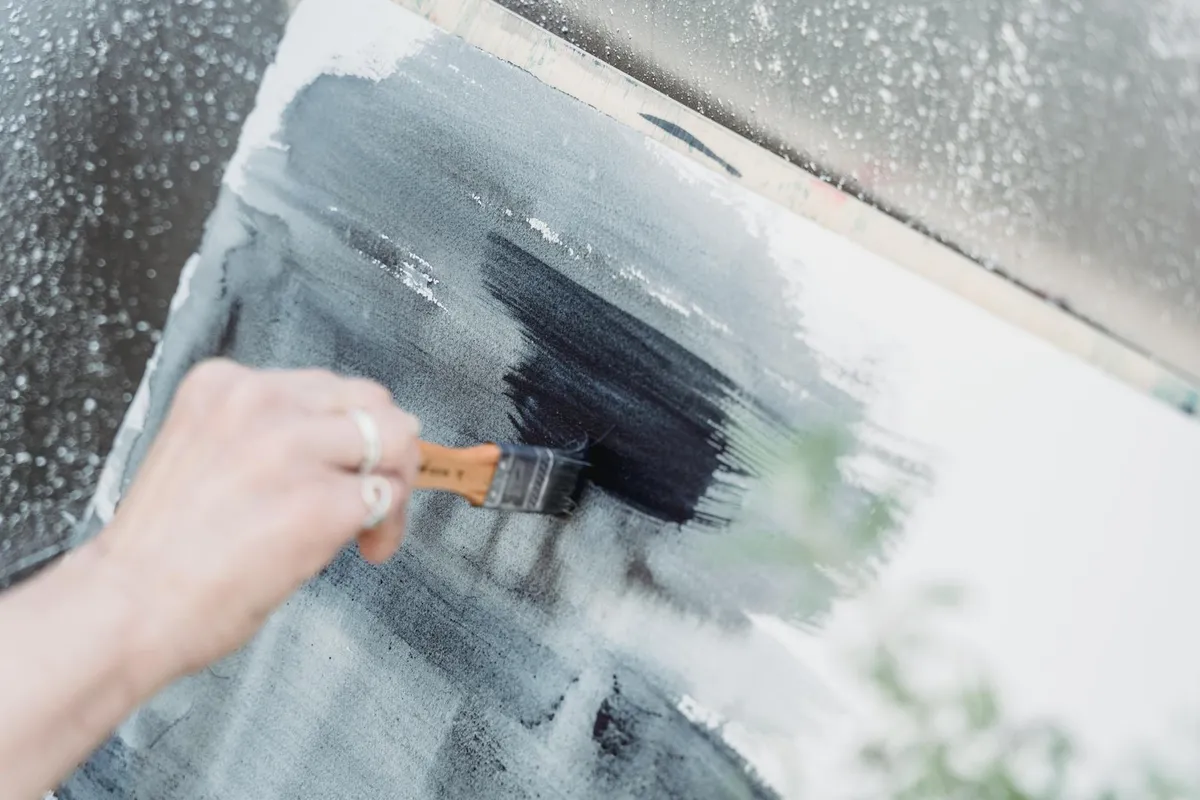
Discussions of artistic process tend to focus on the larger structural decisions — what to make, what subject, what composition, what scale. These are real decisions, and they matter. They are not where the actual character of the work emerges. The actual character comes from the smaller, more-frequent decisions that happen during making — the choice of this brush rather than that one, this color rather than its near-neighbor, this mark rather than another, this moment to stop versus this moment to continue.
This essay is about those decisions during making. What they are, why they matter so much, and how artists develop the capacity to make them well.
What the decisions are
During the working hour at the easel, the artist makes hundreds of small decisions. Some examples from a typical hour of painting:
- Whether to mix a particular color with more white or more burnt umber
- Whether to use the No. 4 brush or the No. 6
- How much pressure to apply at the start of a brushstroke
- Whether the brushstroke should curve slightly or run straight
- Whether to layer a new color over the existing surface or scrape and start that area again
- Whether to step back to look or continue working from close
- Whether to make the next mark at all or wait
- Whether to accept a marginal area as good enough or push it further
- Whether to declare the painting finished or continue
These decisions accumulate continuously. Most are made in fractions of seconds. The artist isn't consciously deliberating each one; the decisions emerge from accumulated experience and present attention.
Why these decisions matter so much
The character of any painting is the cumulative effect of these small decisions. Two artists with the same materials, the same composition, the same intention will produce dramatically different paintings because their accumulated decision patterns differ. The small differences in brush handling, color mixing, mark-making, and timing produce paintings that look different even when the larger choices are identical.
This is part of why artists' work is recognizable. The decisions that make a Cezanne look like a Cezanne or a de Kooning look like a de Kooning are not the structural choices (any artist can decide to paint Mont Sainte-Victoire); they're the moment-to-moment decisions during making that produce specific characteristic surfaces.
The character that emerges from these decisions is what makes work distinctive. Without distinctive moment-to-moment decision patterns, the work tends toward generic competence rather than specific character.
How the decisions are developed
The capacity to make these decisions well develops through extended practice. There are no shortcuts.
The first years of practice are mostly about developing basic vocabulary. The artist learns what brushes do, what materials behave like, what marks feel like. This basic vocabulary is necessary; it's not yet what produces distinctive work.
The middle years are about refining the vocabulary into the artist's own. The decisions that initially required conscious thought become automatic. The accumulated experience builds preferences that become characteristic. The artist's "way of working" begins to be visible to outside observers.
The later years are about expanding the developed vocabulary while maintaining its character. The artist takes on new challenges that test the established patterns; the patterns either prove robust enough to handle new challenges or evolve to accommodate them. The artist's mature work emerges from this continued expansion.
None of this can be compressed. The decision-making capacity that distinguishes mature work develops at the pace of practice itself. Artists who try to skip ahead — to produce mature-looking work without the years of accumulated decision-making — typically produce something that looks like imitation rather than mature work.
The role of looking
The decisions during making depend heavily on looking. The artist looks at the work continuously, seeing what's on the surface and comparing it to what they want to be on the surface. The discrepancy between the two drives the next decision.
Artists who look poorly make decisions poorly. The eye that doesn't catch a wrong color, an awkward edge, a flat area can't guide the hand to fix these. The eye that catches them produces decisions that move toward resolution.
Looking is itself a developed skill. New artists often don't see what experienced artists see in their own work. The capacity to perceive specific qualities in painted surfaces — the warm-cool relationships, the spatial implications, the surface qualities — develops through extensive study of other paintings and one's own.
This is why studying paintings (in person, repeatedly) is so important to development. The looking trained on great paintings carries over into looking at one's own work. The artist who has looked carefully at thousands of paintings sees their own work differently than the artist who hasn't.
The role of physical practice
Decision-making during painting is not purely visual. It's embodied. The hand that has held a brush for thousands of hours moves differently than the hand that hasn't. The body that has stood at an easel develops physical patterns that affect what marks are made.
This bodily knowledge is not articulable through verbal description. It can't be transferred through reading or watching. It develops only through doing.
Artists who paint frequently develop bodily knowledge that infrequent painters don't have. The frequency matters; the duration matters; the consistency matters. The body learns the work through repetition.
The role of attention
The decisions during making depend on the artist's attention being present. Painting while distracted produces paintings that show the distraction — flat areas where attention wandered, awkward decisions where the artist wasn't fully present.
Attention is a finite resource. Artists who try to paint while managing other concurrent demands often produce work that shows the divided attention. The attention required for serious painting is more demanding than the attention required for many other activities.
This is part of why the protected studio hours matter. The hours need to be sustained periods of undivided attention, not snatched moments of partial engagement. The work that requires full attention can't be done with partial attention.
The implication for practice
The understanding that decisions during making are where character emerges has practical implications for how artists practice.
1. Practice quantity matters. The decision-making capacity develops through volume. Artists who make few paintings develop fewer decision-making patterns than artists who make many.
2. Practice quality matters. The hours given to painting need to be hours of present attention, not distracted production.
3. Looking practice matters. Time spent looking at other paintings, in person and repeatedly, develops the seeing that supports decision-making.
4. Patience with development matters. The decision-making capacity develops at the pace it develops. Trying to compress the timeline produces work that doesn't have the depth of mature decision-making.
5. Study of masters matters. Looking at how masters made decisions in their work — what brushes, what colors, what marks, what timing — informs the decisions in one's own work.
The closing observation
The decisions during making are where the actual character of artistic work emerges. They're also the part of the work that's least discussed because they're the hardest to articulate. They develop through extended practice, careful looking, embodied knowledge, present attention.
For artists serious about developing their work, attention to these decisions — to making them more consciously, to learning from each session what worked and what didn't — accelerates development. The accumulation across years produces the distinctive mature work that artists hope to achieve.
The hours at the easel are where this happens. The decisions during those hours are what the work will eventually be. Worth taking seriously, moment by moment, across the years.