
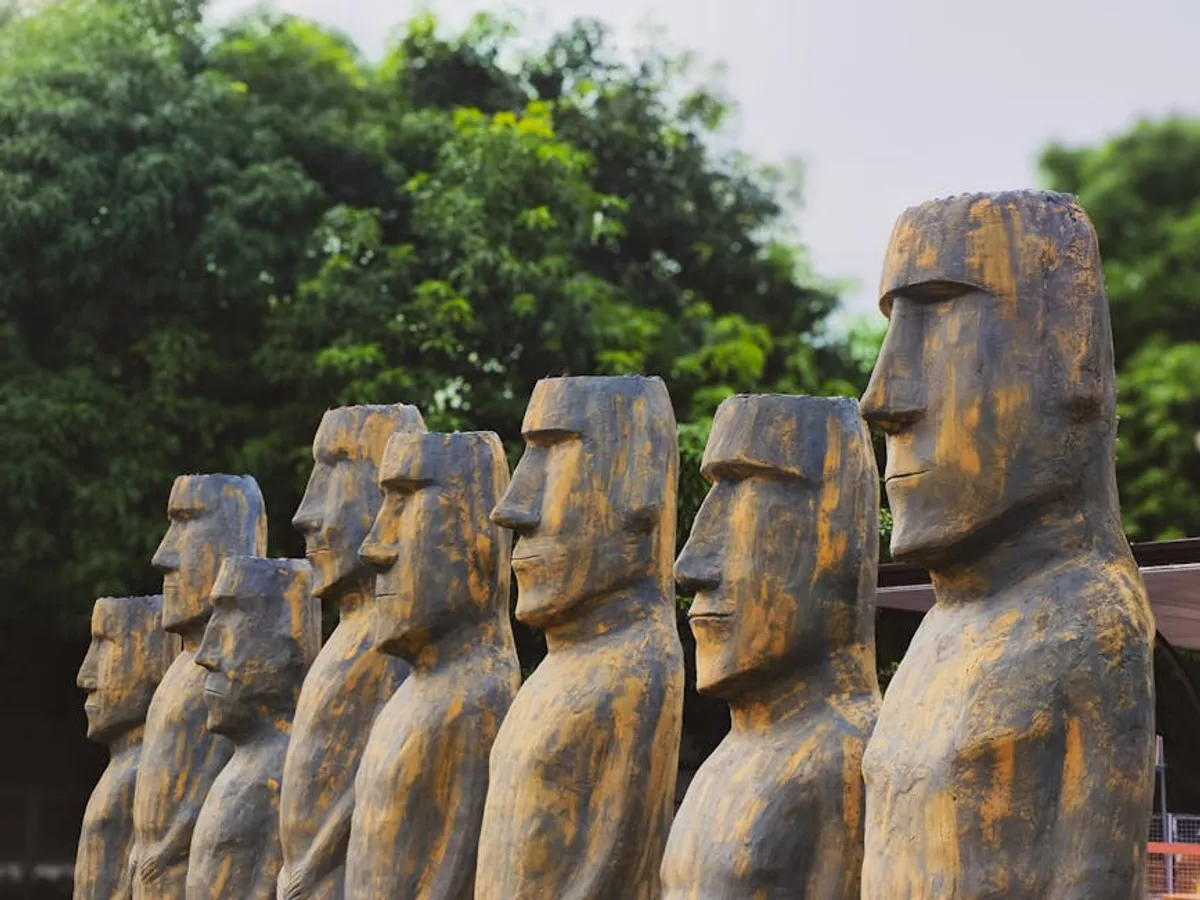
The Moai statues of Rapa Nui (Easter Island) represent one of the most compelling and enigmatic archaeological achievements in human history. These monolithic human figures, carved by the Rapa Nui people between 1250 and 1500 CE, are more than mere sculptures; they are profound cultural statements, ancestral effigies, and enduring symbols of a complex, isolated society. Understanding the Moai involves delving into their spiritual significance, the sophisticated engineering behind their creation and transport, and the historical context that led to their eventual toppling. For anyone engaging with topics of ancient civilizations, monumental art, or sustainable societal development, the Moai offer a rich, multi-layered case study.
The Enduring Significance of Moai Statues
Meaning and Purpose
The primary function of the Moai was to embody the spirits of deified ancestors (aringa ora). Each statue represented a deceased chief or important person, acting as a conduit between the living and the spiritual realm. Positioned with their backs to the sea, facing inland, they watched over their descendants, protecting the villages and ensuring the fertility of the land and people. This ancestral veneration was central to Rapa Nui society, with the size and prominence of a Moai reflecting the status and power of the lineage that commissioned it. They were not idols to be worshipped, but rather sacred vessels for ancestral power, intended to bring prosperity and well-being to their communities.
Cultural Context
The creation of Moai was deeply embedded in the social and religious structures of Rapa Nui. Clans competed to erect the largest and most impressive statues, a practice that consumed significant resources—both human labor and natural materials. This competitive monumental construction was a display of mana (spiritual power and prestige) and a means of solidifying social hierarchies. The statues were integral to rituals and ceremonies, particularly those related to harvest, fishing, and the veneration of the dead. The shift in religious practice and the eventual decline of resources contributed directly to the cessation of Moai production and the subsequent toppling of many existing statues.
Distinctive Stylistic Elements and Construction
Anatomy of a Moai
Moai share a highly stylized, almost minimalist aesthetic, yet each possesses unique details. Key features include:
- Elongated Heads: Approximately three-eighths of the statue's total height, emphasizing intellectual and spiritual prowess.
- Prominent Noses and Lips: Often thin and pursed, giving a solemn, introspective expression.
- Deep-Set Eye Sockets: Originally inlaid with white coral and red scoria pupils, these were added only after the Moai were erected on their platforms, "activating" their spiritual power.
- Long Ears and Strong Jawlines: Reflecting traditional Polynesian aesthetics.
- Stylized Bodies: Typically feature short arms pressed against the torso, with hands often meeting over a protuberant abdomen, sometimes depicting a navel.
- Pukao (Topknots): Many Moai were crowned with cylindrical "hats" or topknots made of red scoria, a lighter volcanic rock quarried from Puna Pau. These represented hair, a sign of high status or chieftainship.
Materials and Carving Techniques
The vast majority of Moai were carved from the soft, easily workable tuff (compressed volcanic ash) found in the Rano Raraku quarry, an extinct volcano that served as the island's primary statue factory. Basalt and trachyte were used for a smaller number of statues, particularly for specialized figures or those carved later. Carving was done using basalt hand adzes (toki) and obsidian tools, requiring immense skill and labor. Once carved, the statues were detached from the bedrock, then slid down the quarry slopes to be finished.
Pro Tip: The Moai's "eyes" were only inserted once the statue was fully erected on its ahu (ceremonial platform). This act was believed to infuse the ancestor with life force, making the Moai a living presence. Today, only a few restored Moai have their eyes, offering a rare glimpse into their original, vibrant appearance.
Historical Timeline of Moai Creation and Transport
Period of Creation
The peak period of Moai carving spanned approximately 250 years, from 1250 to 1500 CE. During this time, an estimated 900 to 1,000 statues were carved, with nearly 400 remaining unfinished within the Rano Raraku quarry itself, offering a unique archaeological record of the carving process and the abrupt halt to production.
Quarrying and Transport
The transport of these massive statues, some weighing over 80 tons and standing up to 33 feet tall, remains one of the greatest mysteries of Rapa Nui. Theories abound, ranging from "walking" the statues upright using ropes and rocking motions, to dragging them horizontally on sledges over log rollers. Experimental archaeology has demonstrated the feasibility of both, suggesting different methods may have been employed depending on the statue's size and terrain. The logistical challenges were immense, requiring organized labor, detailed planning, and a substantial investment of resources, particularly wood for rollers and levers.
Erection and Ahu Platforms
Upon reaching their designated coastal sites, the Moai were erected onto stone platforms known as ahu. These platforms varied in complexity, from simple mounds to elaborate structures incorporating ramps, retaining walls, and sometimes burial chambers. The erection process likely involved ramps, levers, and large quantities of stones and earth to gradually raise the statues into an upright position.
The Toppling of the Moai
By the early 18th century, a period of societal collapse began on Rapa Nui, marked by resource depletion (especially deforestation), internal warfare between clans, and a shift in religious beliefs. This led to the systematic toppling of the Moai (known as huri moai), often by rival groups, as a way to undermine the mana and authority of opposing lineages. By the time European explorers arrived in the mid-19th century, almost all Moai had been pulled down from their ahu, lying face down, their eyes broken.
A Visual Overview of Key Moai Types
Moai at Rano Raraku
The quarry at Rano Raraku is a unique open-air museum, showcasing Moai in various stages of completion. Here, one can observe statues still attached to the bedrock, others partially carved, and many standing upright, half-buried by centuries of erosion. These "standing" Moai in the quarry represent a snapshot of the carving process, frozen in time when production abruptly ceased.
Coastal Moai on Ahu
Many of the Moai seen today standing on their ahu platforms are the result of extensive restoration efforts, particularly during the 20th century. Notable examples include:
- Ahu Tongariki: The largest ahu on Rapa Nui, featuring 15 massive Moai, including the heaviest ever erected (86 tons). Its restoration in the 1990s was a monumental undertaking.
- Ahu Akivi: Unique for its seven Moai facing the sea, believed to represent the first Polynesian explorers to arrive on the island. This site holds astronomical significance, aligning with the equinoxes.
- Ahu Tahai: A complex of three ahu with various Moai, including one with restored coral eyes, offering a glimpse into their original appearance.
Moai with Pukao
The addition of pukao, the red scoria topknots, signifies a later phase of Moai construction and possibly a higher status. These cylindrical additions, often weighing several tons, were quarried from Puna Pau and transported separately, then carefully placed atop the Moai's head after it was erected. Their presence adds another layer of complexity to the logistical challenges faced by the Rapa Nui carvers.
Understanding the Moai Legacy
The Moai statues stand as a powerful testament to human ingenuity, cultural devotion, and the profound impact of environmental and social dynamics on a civilization. Their creation, transport, and eventual toppling offer critical lessons for understanding societal resilience, resource management, and the cyclical nature of power structures. For researchers, educators, and anyone interested in the intersection of art, history, and anthropology, the Moai remain an unparalleled subject of study. Their continued presence, whether standing sentinel or lying toppled, ensures their legacy as a global icon of mystery and monumental achievement.
Frequently Asked Questions About Moai
What materials were Moai made from?
Most Moai were carved from volcanic tuff found in the Rano Raraku quarry. A smaller number were made from basalt or trachyte. The eyes were typically inlaid with white coral and red scoria, while the topknots (pukao) were made from red scoria quarried at Puna Pau.
How were the Moai transported across Easter Island?
The exact methods for transporting Moai are still debated, but theories include "walking" them upright using ropes and rocking motions, or dragging them horizontally on sledges over log rollers. Experimental archaeology has shown both methods are plausible, likely depending on the statue's size and the terrain.
Why were the Moai eventually toppled?
The toppling of the Moai was a consequence of societal collapse on Rapa Nui, driven by deforestation, resource scarcity, and internal warfare between clans. Toppling a rival clan's Moai was a way to symbolically destroy their ancestral power and prestige during conflicts.
What is the significance of the Moai's eyes?
The Moai's eyes, made of white coral and red scoria, were inserted only after the statue was erected on its ahu. This act was believed to "activate" the statue, imbuing it with the spirit and mana of the ancestor it represented, allowing it to protect and watch over the community.