
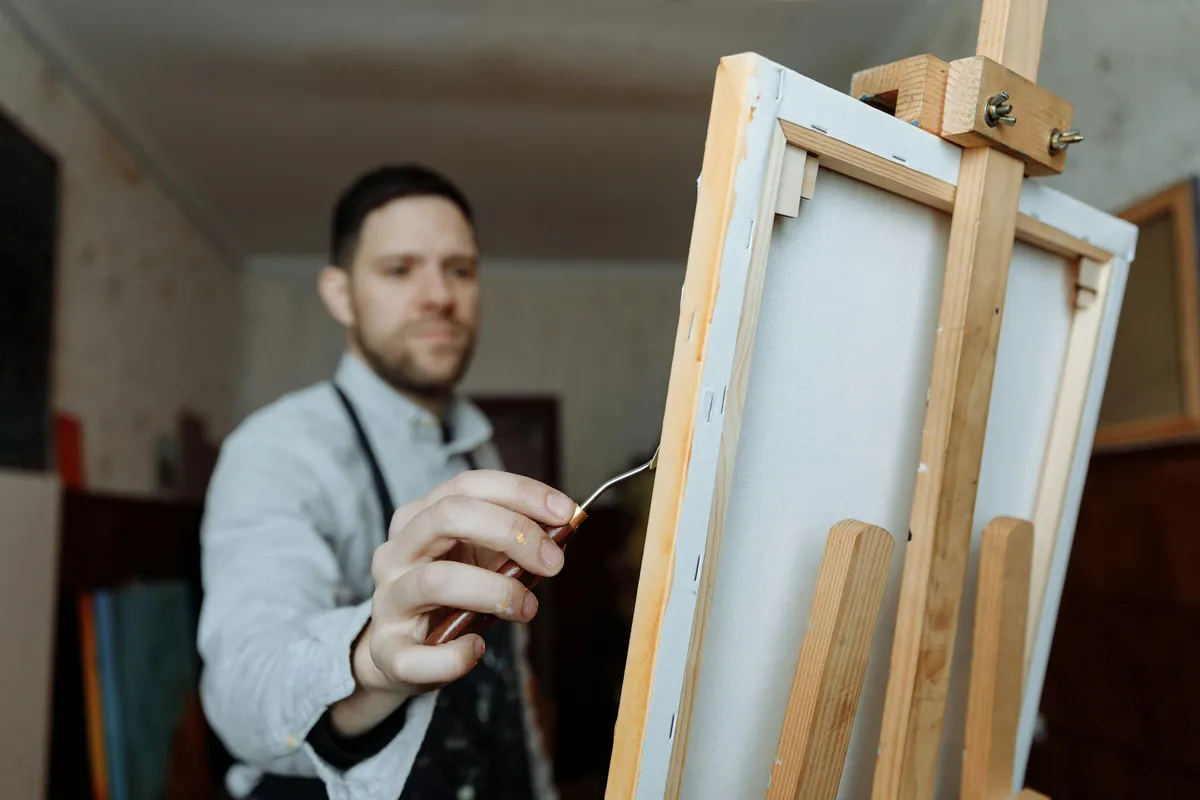
Most paintings I make come together within expected timeframes. The work moves through its phases — initial layout, structural development, refinement — at roughly the pace I've come to expect for paintings of comparable scale and complexity. The exceptions, when paintings refuse to come together, teach more than the routine work.
This essay is about one specific difficult painting and the process of working through it. The painting eventually came together; the path it took was instructive about what difficulty in making actually requires and what it produces.
The painting
The painting in question was 36 by 48 inches, oil on linen, started about 18 months before its completion. The subject was a landscape based on photographs I'd taken during a residency in another part of the country. The composition was meant to be relatively simple — a horizontal landscape with a strong central element — and I'd expected the painting to take perhaps 10-12 weeks of regular work.
It took 18 months. The intervening period included multiple full repaints, periods when I couldn't bring myself to work on it, decisions to abandon it that I subsequently reversed, and stretches when I worked on other paintings while leaving this one to wait.
The path through the difficulty is what I want to document.
The first attempt (months 1-3)
The initial work proceeded as I'd planned. The composition went in cleanly. The first color passes felt confident. By month 3 I had what looked like an advanced painting — the structure was right, the major color relationships were set, the surface had developed substantial paint quality.
Then I stopped working on it for two weeks for unrelated reasons.
When I returned to it, I saw something different. The painting that had felt right two weeks earlier now felt off. Something about the central element — the relationship between its scale and its color — wasn't working. I couldn't articulate exactly what was wrong, but the painting wasn't doing what I'd wanted it to do.
The second attempt (months 4-7)
I tried to fix the painting through targeted revision. Adjusted the color of the central element. Modified its scale through additional work. Reworked the surrounding areas to support the changes.
The targeted revision didn't work. The painting got worse, not better. The surface became overworked — paint applied over paint applied over paint, losing the freshness the original had had. The relationship between the central element and its surroundings shifted multiple times without resolving.
By month 7 I had a painting that wasn't working in any version. The original painting that had been "off" was now buried under multiple unsuccessful corrections.
The crisis (month 8)
I considered abandoning the painting. The investment to that point had been substantial; the result was unsatisfying. The honest assessment was that I'd ruined whatever the painting had been three months earlier.
For several weeks I left it leaning against the studio wall, neither working on it nor putting it away. I worked on other paintings during this period. The difficult painting sat in my peripheral attention.
The crisis was useful even though it didn't feel useful at the time. The space allowed me to look at the painting without trying to fix it. I started to understand what had gone wrong in a way that the active working hadn't allowed.
The diagnosis (month 9)
What I came to understand: the painting's problem wasn't the central element's color or scale. It was the entire compositional logic. The horizontal landscape format with a single central element was producing a static composition that I couldn't make work no matter how I adjusted the elements within it.
The original painting had felt confident at month 3 because I hadn't yet seen what was structurally wrong. The two-week break had created enough distance to see the structural problem that close working had hidden.
The targeted revisions had failed because they'd addressed surface symptoms of a deeper problem. The composition itself needed to change.
The complete repaint (months 10-14)
I scraped the painting down to the linen, leaving traces of the original work as ground. Then I painted the painting again with a substantially different composition. The horizontal landscape became a vertical landscape with two related but distinct elements rather than a single central one. The color relationships shifted accordingly.
The repainting took several months but proceeded with confidence. The new composition worked. The painting developed quickly through the same phases the original had moved through, but this time arriving at something that held together.
The refinement (months 15-18)
The final months were refinement of the new painting — adjustments to color relationships, surface quality work, the small changes that distinguish a finished painting from an advanced draft.
By month 18 the painting was finished. It hung on the studio wall for several weeks while I looked at it before signing it. The painting that resulted was substantially different from the painting I'd originally planned. It was, in my judgment, better than the original plan would have produced.
What the difficulty taught
The painting's difficulty taught me things that more-routine paintings hadn't.
1. The two-week break revealed problems that close working had hidden. Building distance into the working process — leaving work for periods, returning with fresh eyes — catches problems that continuous engagement misses. I now build deliberate breaks into difficult paintings rather than working through without space.
2. Targeted revision can't fix structural problems. When a painting isn't working at the structural level (composition, fundamental relationships), surface revisions accumulate without solving anything. Recognizing structural problems requires stepping back to compositional questions rather than continuing with surface adjustments.
3. Crisis periods are part of the work, not failure of it. The weeks I left the painting in the corner felt like failure. They turned out to be necessary. The diagnosis required the space the crisis provided.
4. Complete repainting is sometimes the right answer. Scrapping months of work to start over feels destructive. Sometimes it's the only way forward. The investment in failed attempts isn't wasted; it produces understanding that the successful attempt depends on.
5. Difficult paintings often turn out better than easy ones. The painting that came through this process was stronger than the painting I would have made without the difficulty. The difficulty produced engagement with structural questions that easier work doesn't require.
What I now do differently
For paintings that aren't coming together quickly, my current practice:
- Build space into the process. Don't work continuously on difficult paintings. Leave them for days or weeks; return with fresh eyes.
- Diagnose at the structural level when surface revisions fail. Ask whether the problem is composition, color relationships, conceptual approach — not just specific elements.
- Be willing to scrap. Painted layers that aren't working should be scraped or covered, not built on. Building on broken foundations doesn't produce better paintings.
- Trust the crisis. The periods when I can't work on a painting are sometimes the periods when the painting is teaching me what it needs.
- Allow the long timeline. Some paintings take what they take. Forcing them to a schedule produces compromised work.
The broader implication
The difficult painting became, in retrospect, the most-instructive painting I made that year. The routine paintings developed my practice incrementally; the difficult painting developed it substantially.
This suggests something about studio practice generally: the difficult work is where most learning happens. Artists who only work on what comes easily produce competent work but limited development. Artists who engage with difficulty — and don't abandon the difficult work prematurely — develop in ways that easier work cannot support.
The investment in working through difficulty is one of the underestimated parts of artistic practice. It's painful in the moment; it produces development that has nothing else can match. Worth the investment when difficult paintings appear.
The closing observation
Difficult paintings teach what easy paintings can't. The process of working through them is part of how artistic practice develops. Avoiding difficulty produces flat practice; engaging with it produces practice that grows across decades.
For the next difficult painting in your studio, the recommendation: don't abandon it prematurely. Build space into the process. Diagnose at the structural level. Be willing to scrap and start over. The painting that emerges from this work will likely be stronger than what you'd have made without the difficulty.
The difficult work is where the practice grows. Welcome it when it comes, even though it's hard.